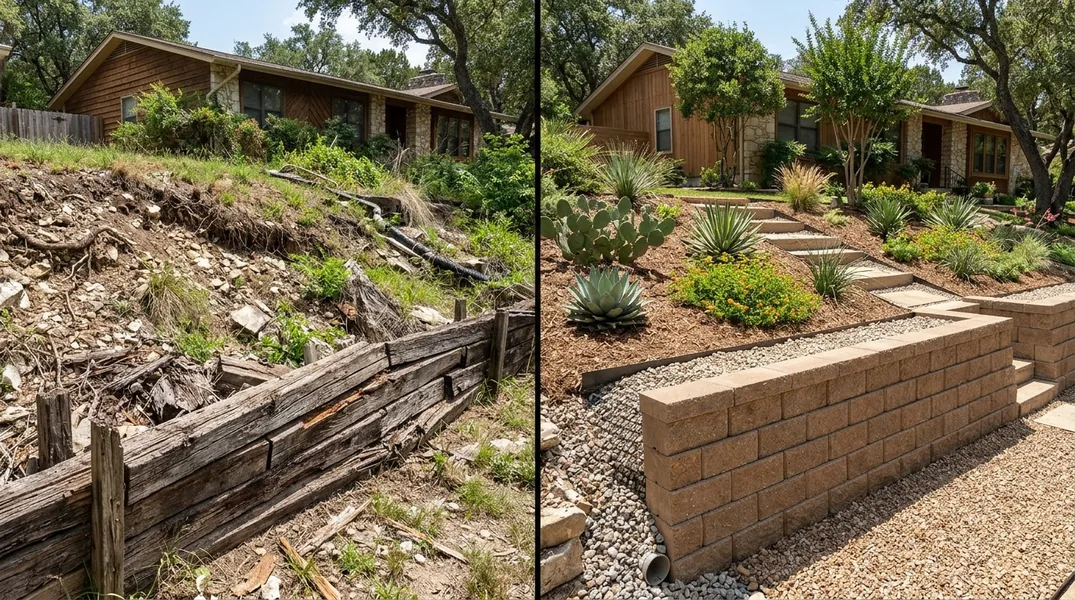
The Hidden Threat: How Flash Floods Attack Retaining Walls
Central Texas storm season brings torrential downpours that test every structure on your property, and retaining walls are often the first casualties. When heavy rain pounds Austin neighborhoods, water doesn't simply run off the surface. It accumulates behind and within your retaining wall, creating enormous pressure that can crack, bow, or topple even professionally installed structures. The problem isn't always visible until it's too late.
Unlike typical residential construction, retaining walls face a unique challenge during flash flood events. They're designed to hold back soil, but when water saturates that soil, the weight multiplies dramatically. A cubic foot of dry soil weighs roughly 100 pounds, but saturated soil can weigh 130 pounds or more. This additional burden, combined with water pressure itself, creates what engineers call hydrostatic pressure retaining wall failure. Without proper drainage systems in place, even a well-built wall can fail within hours of intense rainfall.
Understanding Hydrostatic Pressure and Wall Failure
Hydrostatic pressure is the force exerted by water pushing against your retaining wall from behind. During a flash flood or heavy downpour, water doesn't drain away as quickly as it accumulates. Instead, it pools behind the wall, building pressure that increases with every inch of water depth. This pressure acts horizontally against the wall, trying to push it forward and outward. The taller your wall, the greater the potential pressure and the more catastrophic the failure can be.
When hydrostatic pressure builds up, your wall experiences stress in multiple directions simultaneously. The soil becomes heavier, the water pushes harder, and the wall's structural integrity weakens. Cracks begin to form, often starting at the base or corners where stress concentrates. Over time, these cracks expand, water seeps through, and the wall's foundation becomes compromised. In severe cases, the entire structure can bow outward or collapse suddenly, creating a dangerous situation for your property and neighboring homes. This is why proper retaining wall drainage design isn't optional in Central Texas, where intense summer storms are common.
Why Standard Drainage Often Fails During Storm Season
Many homeowners believe that adding a few drainage holes to a retaining wall is sufficient protection against water damage. In reality, simple drainage holes are often overwhelmed during flash flood events. When rain falls at rates exceeding one to two inches per hour, water accumulates faster than small drainage openings can handle. The soil behind the wall becomes saturated, and water pressure builds up behind the wall face before it can escape through inadequate drainage provisions.
The solution is installing a comprehensive retaining wall french drain system designed specifically for high-volume water management. A French drain is a perforated pipe buried along the base of your retaining wall, surrounded by gravel and landscape fabric. This system collects water before it can build up behind the wall and channels it safely away from the structure. During heavy rains in Cedar Park and surrounding areas, a properly installed French drain can be the difference between a wall that survives the season and one that requires emergency Retaining Wall Repair. Without this system, even new walls can fail catastrophically.
Signs Your Retaining Wall Is Suffering from Water Damage
Early detection of water-related damage can save you thousands in repair costs. Watch for visible cracks that appear after heavy rain, especially horizontal cracks or those that seem to widen over time. If you notice water pooling behind your wall, seeping through the wall face, or white mineral deposits (efflorescence) on the surface, these are clear signs that water is not draining properly. Bowing or bulging of the wall is an especially serious warning sign that hydrostatic pressure is building dangerously.
Another indicator is soft or muddy soil at the base of the wall, which suggests water is accumulating there instead of draining away. You might also notice the wall tilting slightly forward or settling unevenly along its length. These problems typically worsen after each storm season, so addressing them quickly is critical. If you observe any of these signs on your property in Austin, contact Austin Retaining Wall at (737) 204-6261 for a professional assessment. Ignoring these warning signs often leads to complete wall failure and the need for full Retaining Wall Replacement.
Protecting Your Wall: Proper Drainage Solutions for Central Texas
The most effective defense against flash flood damage is a multi-layered drainage strategy. This begins with proper Retaining Wall Installation that incorporates French drains, perforated drainage pipes, and gravel backfill designed to move water away from the wall efficiently. Concrete Retaining Walls need just as much drainage protection as other materials, especially in Central Texas where soil composition varies significantly from one neighborhood to another.
Beyond the French drain, your wall needs proper surface water management. Gutters and downspouts should direct roof runoff away from the wall, not toward it. Landscape grading should slope away from the wall to encourage water to flow elsewhere on your property. The soil backfill behind the wall should include a drainage layer of coarse gravel rather than compacted clay, which traps water. Finally, your wall should have adequate weep holes spaced properly along its face to allow any trapped water to escape. When all these elements work together, your retaining wall can withstand even severe Central Texas storms.
Getting Professional Help: When to Call a Retaining Wall Expert
If your retaining wall is already showing signs of water damage or if you're concerned about its ability to handle the upcoming storm season, now is the time to seek professional guidance. A qualified retaining wall contractor can assess your current drainage system, identify weak points, and recommend solutions tailored to your specific property and soil conditions. Austin Retaining Wall specializes in diagnosing and fixing water-related wall failures throughout the region.
Whether you need a new retaining wall french drain system installed, repairs to an existing wall, or a complete assessment of your current structure, professional expertise is invaluable. The cost of preventive drainage improvements is far less than emergency repairs or complete wall replacement after a failure. To discuss your retaining wall's drainage needs and receive a free estimate, contact Austin Retaining Wall today at (737) 204-6261. Our team can help you protect your property before the next storm arrives.
Looking for a professional retaining wall contractor in Austin? Austin Retaining Wall responds fast for all your retaining wall needs.
Get a Free QuoteOur services: Retaining Wall Installation · Retaining Wall Repair · Retaining Wall Replacement