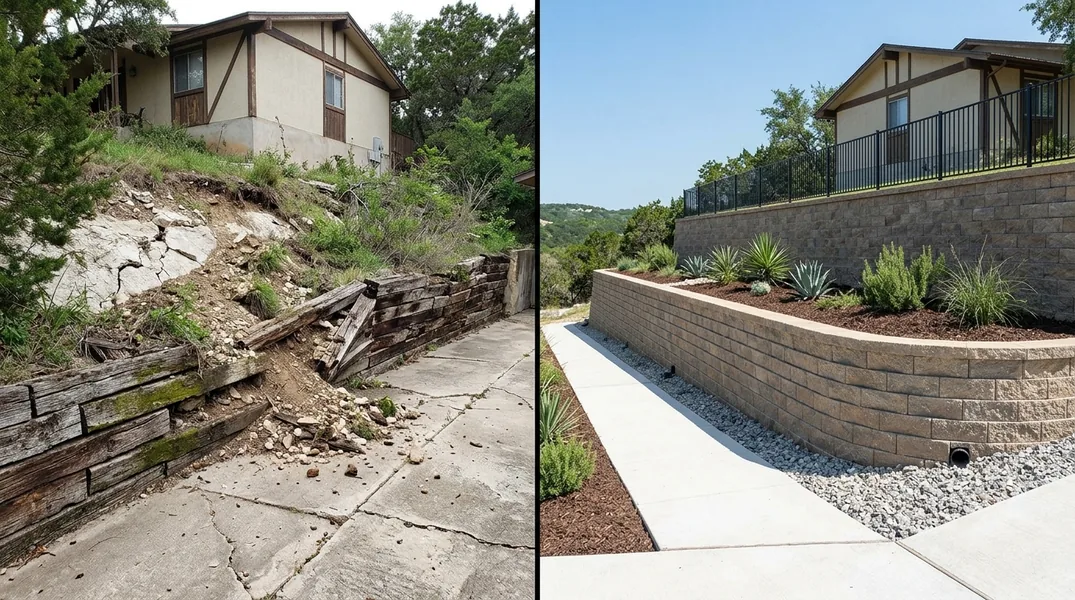
Why Retaining Walls Lean: Understanding the Problem
A leaning retaining wall is never a cosmetic issue. When you notice your wall tilting away from the soil it's meant to hold back, or bowing inward, you're looking at a structural failure in progress. In Austin and the surrounding Central Texas region, several factors combine to create ideal conditions for retaining wall problems.
The primary culprit is water. Our clay-heavy soil expands when wet and contracts when dry, creating tremendous lateral pressure against the wall. During heavy rains or spring flooding, that pressure intensifies dramatically. Poor drainage behind the wall allows water to accumulate, pushing the wall forward or causing it to settle unevenly. Additionally, the freeze-thaw cycles we experience in Central Texas, while milder than northern climates, still stress concrete and masonry over time. Tree roots growing behind the wall can also destabilize the structure, while inadequate foundation depth or compaction during initial Retaining Wall Installation leaves the wall vulnerable to shifting.
Signs Your Wall Needs Attention Now
Not all retaining wall damage looks the same, but certain warning signs demand immediate action. Visible leaning or bowing is the most obvious indicator that your wall is failing. You might also notice retaining wall crack repair needs, including horizontal cracks, stair-step fractures in masonry, or wide vertical splits in concrete. Water pooling at the base of the wall or seeping through the surface suggests drainage failure, which accelerates deterioration.
Other red flags include sections of the wall pulling away from adjacent structures, soil or mulch bulging out behind the wall, or pieces of concrete or stone breaking away. If you see standing water behind the wall after rain, that's a critical sign that your drainage system has failed. In Austin's climate, these problems tend to worsen quickly because our intense summer heat and occasional heavy downpours create extreme stress cycles. Don't wait to investigate. A small lean today becomes a catastrophic collapse tomorrow, potentially damaging your home, injuring someone, or creating expensive liability issues.
Repair vs. Replacement: How to Decide
The choice between Retaining Wall Repair and Retaining Wall Replacement depends on the extent of damage, the wall's age, and its structural integrity. Minor issues such as small cracks, minor leaning (less than 1 to 2 inches), or localized drainage problems are often good candidates for repair. If the wall is relatively young and the damage appears contained to one section, a targeted repair approach can restore function and add years of life to the structure.
However, replacement becomes the better choice when the wall shows severe lean (more than 2 to 3 inches), extensive cracking throughout multiple sections, or signs of foundation failure. If the wall is already 20 to 30 years old and showing multiple problems, repair costs can quickly approach replacement costs anyway, making a fresh installation more economical in the long run. A professional inspection is essential here. The experts at Austin Retaining Wall can evaluate your specific situation and recommend the most cost-effective solution for your property. When in doubt, contact us at (737) 204-6261 for a free estimate and honest assessment.
Retaining Wall Repair Solutions Near Me
If your wall is a good candidate for repair, several proven techniques can restore stability without the expense of full replacement. Drainage improvement is often the first and most impactful step. Installing or repairing a French drain system behind the wall redirects water away from the structure, dramatically reducing hydrostatic pressure. This alone can stop active leaning and prevent further damage.
For Concrete Retaining Walls with minor to moderate cracking, epoxy injection or concrete patching can seal cracks and restore structural integrity. Helical piers or soil anchors can be installed to support a wall showing moderate lean, essentially tying it back to stable soil deeper underground. In some cases, adding reinforcement to the wall's facing or installing a new facing over the existing structure provides both structural support and a refreshed appearance. Local contractors serving Austin understand the specific soil and climate challenges of Central Texas and can recommend repairs tailored to these conditions.
When Replacement Makes the Most Sense
Full Retaining Wall Replacement is warranted when structural damage is severe, widespread, or when the wall has simply reached the end of its lifespan. A new installation allows you to address the root causes of failure, such as poor drainage design or inadequate foundation depth that plagued the original wall. Modern retaining wall construction incorporates better materials, improved drainage systems, and updated building practices that make new walls significantly more durable than older ones.
Replacement also gives you the opportunity to upgrade your wall's design and materials. You might choose Concrete Retaining Walls for superior durability, natural stone for aesthetic appeal, or composite materials that combine strength with low maintenance. A properly installed replacement wall, built with attention to drainage and foundation requirements, should serve you reliably for 30 to 50 years or more in Central Texas conditions. While the upfront cost is higher than repair, the long-term value and peace of mind are substantial.
Retaining Wall Installation Cost in Austin: What to Budget
Understanding pricing helps you make an informed decision about repair versus replacement. Repair costs typically range from $500 to $5,000 depending on the scope, with drainage improvements and crack sealing falling on the lower end and structural reinforcement on the higher end. Replacement costs vary more widely based on wall height, length, material choice, and site accessibility, generally ranging from $3,000 to $15,000 or more for a substantial wall in the Austin area.
Several factors influence final cost. Wall height and linear footage are primary drivers, as are material selection and site conditions. Difficult terrain, poor soil quality, or the need to remove an existing wall before building a new one increases expenses. Labor costs in Austin reflect the local market and contractor experience. Rather than guessing, request a detailed free estimate from Austin Retaining Wall. We'll assess your wall's condition, discuss your options, and provide transparent pricing so you can budget accordingly. Call (737) 204-6261 to schedule your inspection.
Taking Action: Your Next Steps
A leaning retaining wall won't fix itself, and delays only increase the risk of catastrophic failure. The first step is a professional evaluation. Austin Retaining Wall serves homeowners throughout Central Texas with expertise in diagnosing wall problems and recommending solutions that fit your budget and timeline. We understand the unique challenges retaining walls face in our region's climate and soil conditions.
Contact Austin Retaining Wall today at (737) 204-6261 or visit our website at https://austin-retaining-wall.com to schedule your free estimate. Our team will inspect your wall, explain what's happening, and present your options for repair or replacement. Whether your wall needs targeted repairs or a complete rebuild, we have the skills and experience to restore safety and functionality to your property. Don't let a leaning wall become a crisis. Reach out now and take control of the situation.
Looking for a professional retaining wall contractor in Austin? Austin Retaining Wall responds fast for all your retaining wall needs.
Get a Free QuoteOur services: Retaining Wall Installation · Retaining Wall Repair · Retaining Wall Replacement